
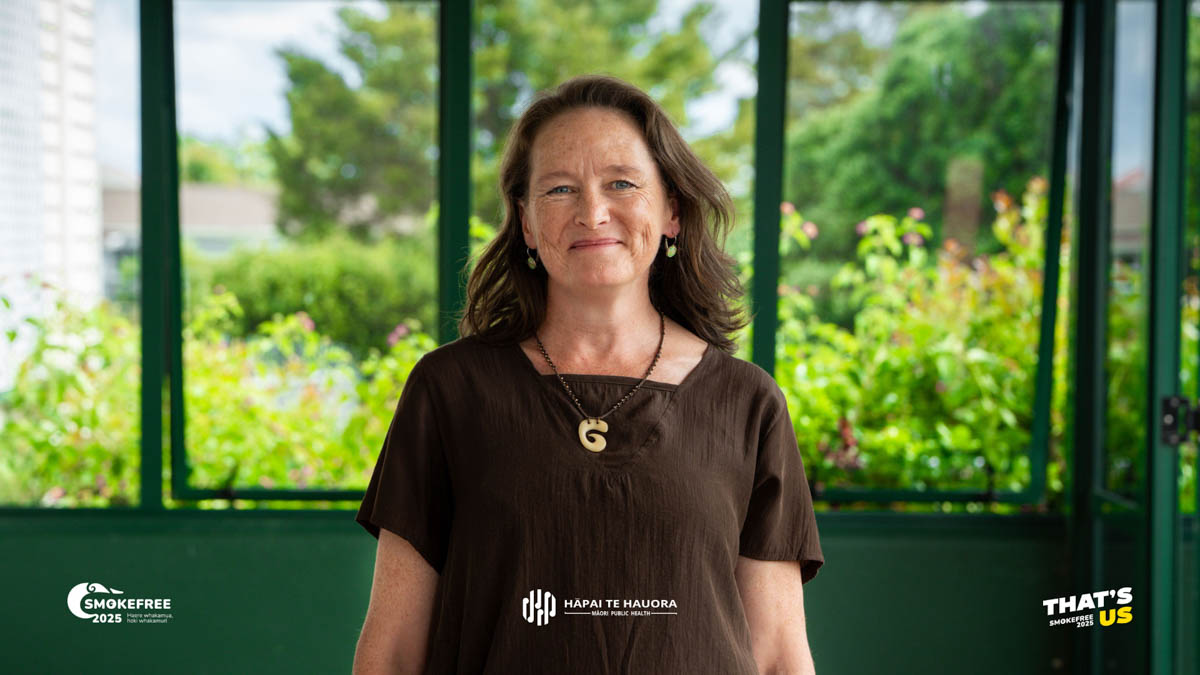
Sally Anne Clark lives in the Far North, in a small place called Kaingaroa.
She’s always been an outdoorsy person. But for a long time, smoking sat alongside that life – quietly shaping it.
Before she quit, she remembers the anxiety.
Trying to find money for cigarettes.
Worrying about what would happen if she couldn’t.
“I’d think about how I would cope,” she says.
She had been smoking since her teens, more than 30 years.
“It was hard to quit because I was always around it. My husband was smoking too, and I didn’t really know how to start to stop… or if I could actually do it.”
Over time, things started to shift.
What she once considered light smoking began to increase. The physical impacts became harder to ignore.
“I’d developed a smoker’s cough, sinus issues, and I couldn’t keep up with my friends when we’d go for walks,” she says.
“I was huffing and puffing.”
For someone who loves the outdoors, that mattered.
“I couldn’t get up a hill as well as I can now.”
Cost played a part too. Cigarettes were getting more expensive, and it was starting to add up.
But the biggest turning point came when her husband was diagnosed with COPD.
“I thought maybe if I prove that it’s possible, then there’s a chance he would want to quit too.”
For years, she had been asked by the doctor if she wanted support to stop smoking. Every time, she said no.
Until one day, she didn’t.
“This time I said, yes please.”
That decision led her to Toki Rau, Te Hiku where she connected with a stop smoking practitioner named Caroline.
“She was really positive, open-minded, and there was no judgement,” Sally says.
“I actually got off the phone feeling excited.”
For the first time, she had support.
“I learnt about my triggers and how to manage them.”
One moment stuck with her.
“She said, ‘I can help you with the nicotine cravings, but the behaviour stuff needs to come from you.’”
“That’s when the penny dropped.”
This time was different.
“I made up my mind, and I had that support.”
She also started talking to others who had quit, learning from their experiences and what worked for them.
Small goals helped too.
Using a smokalyser, she could track her progress.
“I used to set a goal to blow a two or less,” she says.
“Meeting those goals was a big game changer.”
Since quitting, the changes have been clear.
She feels better. She has more energy. She can breathe easier.
“More money goes towards healthy food,” she says. “I’ve even been able to buy things like new gumboots.”
And then there’s the impact on her whānau.
Her husband who once said he would give up smoking “when he gave up breathing”, has now quit too, after 45 years.
“That’s massive.”
She notices the difference in their home now.
“The smell… you really notice it when you quit,” she says. “And I don’t smell that anymore.”
For Sally, being Smokefree now means one thing above everything else.
“Freedom.”
“I’m not tied to it anymore. I don’t depend on it. I don’t freak out if I lose my smokes,” she says.
“I can taste food properly again. I can walk outside and smell the flowers. It’s life changing.”
She’s also noticed a wider shift.
“It’s not as socially acceptable as it used to be. People are starting to frown on it more,” she says.
“And that’s a good shift.”
Looking back, there’s only one thing she would change.
“If I could turn back the clock, I would’ve tried to tackle this earlier.”
But where she is now feels solid.
And her message to others is simple:
“If I can do it, and if my husband can do it, you can do it.”
“There’s nothing to lose by trying. You have nothing to lose, and everything to gain.”